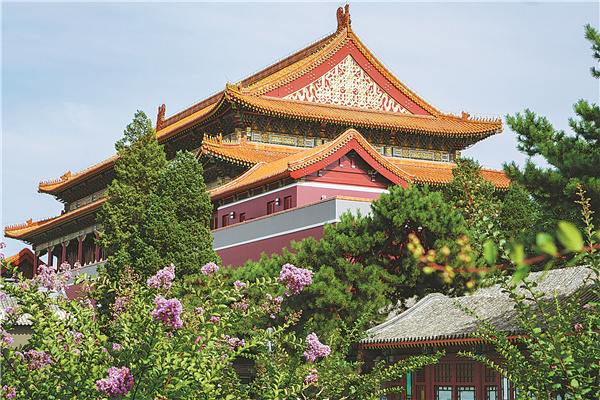
The Altar of Land and Grain
Introduction
The Altar of Land and Grain, originally built during the Ming Dynasty (1368-1644) in the 15th century, is a key historical and cultural site in Beijing, China. It is now part of Zhongshan Park, situated to the southwest of the Forbidden City. The Altar was constructed as a place for the emperors to offer sacrifices to the gods of the land and grain, symbolizing both state territory and agricultural prosperity. This sacred site played a vital role in the imperial rituals, with over 1,300 sacrificial ceremonies conducted there by the emperors of the Ming and Qing dynasties. The altar is notable for its unique layout, a square terraced structure made of white marble, topped with soils of five different colors representing the ancient Chinese cosmology. These soils were gathered from various parts of the state and arranged in five directions, symbolizing the five elements and directions: yellow in the center, green in the east, red in the south, white in the west, and black in the north.
History
Origin and Construction
The Altar of Land and Grain was constructed following the traditional conventions of imperial Chinese architecture. It was established during the Ming Dynasty in the 15th century, a period that emphasized the importance of spatial organization in accordance with the ancient Chinese cosmological beliefs and rituals. Situated strategically on the west side of the Beijing Central Axis, opposite the Imperial Ancestral Temple, the Altar formed part of a carefully planned urban layout that embodied the ideal order of a capital city, as described in ancient Chinese texts like the Kaogongji (Book of Diverse Crafts).
Historical Significance
The historical significance of the Altar of Land and Grain lies in its role as a central site for state rituals. The Ming and Qing emperors used the altar to conduct elaborate ceremonies to honor the gods and ensure the prosperity of the land, reflecting the intertwined nature of governance, agriculture, and spirituality in Chinese civilization. These rituals underscored the emperor's role as the mediator between the heavens and the earth, tasked with maintaining cosmic harmony and prosperity. The Altar was not just a religious site but also a symbol of imperial power and territorial integrity. Its location, design, and use were deeply rooted in Chinese philosophical and cultural traditions, serving as a testament to the centrality of ritual in sustaining the socio-political order.
Architecture
Design and Layout
The architectural design of the Altar of Land and Grain is a remarkable example of Ming Dynasty design, characterized by its symmetrical and harmonious layout. The altar is a square terraced structure, which aligns with the ancient Chinese belief in the square shape representing the earth. The terraces are constructed from white marble, a material traditionally associated with purity and immortality. The top of the altar is adorned with soils of five distinct colors, each representing a direction and an element according to Chinese cosmology: yellow for the center, green for the east, red for the south, white for the west, and black for the north. This arrangement reflects the ancient Chinese understanding of the universe's balance and order.
Materials Used
The construction of the Altar of Land and Grain involved the use of traditional materials that were emblematic of Chinese architectural practices. The primary material used is white marble, chosen for its durability and aesthetic appeal. The use of marble not only added to the altar's grandeur but also signified purity and reverence, appropriate for a site of such spiritual and ceremonial importance. Additionally, the five-colored soils placed on the top terrace were sourced from different regions across the state, each color holding symbolic meaning in Chinese culture. This inclusion of diverse soils highlights the altar's role as a microcosm of the state, symbolically uniting different territories under the emperor's domain.
Cultural Importance
Role in Ancient Rituals
In ancient China, the Altar of Land and Grain was the focal point of significant state rituals conducted by the emperors. These rituals were deeply embedded in the cultural and spiritual life of the empire, intended to ensure the fertility of the land and the stability of the state. They involved complex ceremonies that included offerings to the gods, music, and dance, all performed with strict adherence to Confucian rites. The emperor, as the Son of Heaven, played a central role in these ceremonies, reinforcing his divine mandate to rule. The rituals at the altar were not only expressions of piety but also acts of governance, reinforcing the connection between the emperor, the land, and the people.
Symbolism
The symbolism of the Altar of Land and Grain is rich and multifaceted, reflecting key elements of Chinese cosmology, politics, and culture. The altar itself, with its square shape and terraced design, symbolizes the earth and the emperor's role in maintaining harmony between heaven and earth. The five-colored soils represent the five elements and directions, highlighting the ancient Chinese belief in the balance and unity of the cosmos. The rituals performed at the altar symbolized the emperor's responsibility for the well-being of the state and its people, emphasizing the interconnectedness of nature, governance, and spirituality. This symbolism underscored the emperor's divine right to rule and the importance of ritual in maintaining cosmic and social order.
Preservation and Restoration
Over the centuries, the Altar of Land and Grain has undergone several restoration and preservation efforts to maintain its historical and cultural integrity. With its conversion into Zhongshan Park, the altar became more accessible to the public, leading to increased awareness and appreciation of its significance. Preservation efforts have focused on maintaining the structural integrity of the altar's marble terraces and the arrangement of the five-colored soils. These efforts are part of broader initiatives to protect the heritage sites along Beijing's Central Axis, ensuring that they continue to serve as testimonies to China's rich historical and cultural traditions. The preservation of the altar is crucial not only for its historical value but also for its role in educating current and future generations about the cultural heritage of ancient China.
Influence on Modern Culture
The Altar of Land and Grain, as part of the broader Beijing Central Axis, continues to influence modern culture and urban planning. Its integration into Zhongshan Park has made it a site of historical interest and a cultural symbol that resonates with both locals and tourists. The altar's design and symbolic elements are often referenced in contemporary discussions about Chinese cultural identity and heritage preservation. Additionally, the site serves as a venue for cultural events and activities that aim to celebrate and promote traditional Chinese culture. The legacy of the altar, as part of Beijing's historical landscape, continues to inspire appreciation for the city's architectural and cultural heritage, highlighting the enduring impact of ancient Chinese ideals on modern life.








